For assessors & buyers

Technical Summary for Third-Party Assessors.

Improved Cooking Madagascar. Verified technical parameters for accurate project assessment.

For assessors and prospective buyers. This document sets out verified technical parameters for the Improved Cooking Madagascar project. SaniTap requests that any third-party assessment of this project references this summary and is conducted with direct access to the project documentation listed below. Please contact us before commencing any assessment.

The Improved Cooking Madagascar project distributes high-efficiency improved cookstoves in Toliary Province, Madagascar, generating verified emission reductions through reduced firewood and charcoal use. This summary sets out the five technical areas most critical to accurate project assessment. Supporting documentation is available on request.

Gold Standard Registry. PoA GS12600; VPAs GS12851, GS23369, GS23370, GS23409. Updated October 2026. See the credit register for issued, retired and available volumes, refreshed from the registry.

Status. Gold Standard certified. The 2025 vintage is issued: 76,607 verified emission reductions (October 2026) across VPAs 3, 5, 6 and 7, carrying the Gender Responsive label and the ICVCM CCP label. The 2026 vintage (~120,000 tCO₂e) is to be issued early 2027.

01
Carbon methodology

GS TPDDTEC V4.0, confirmed CCP-eligible.

CCP confirmed

The project applies GS Technologies and Practices to Displace Decentralised Thermal Energy Consumption (TPDDTEC) Version 4.0. This is a Gold Standard methodology confirmed as a CCP-eligible category by the ICVCM when certain requirements are met.

Assessors should note that this project does not use the GS Methodology for Metered & Measured Energy Cooking Devices (MMECD) in any version. MMECD is a distinct methodology. Any assessment referencing MMECD v1.0 or v1.2 in relation to this project is methodologically incorrect, and all findings derived from it are invalid.

Methodology
GS TPDDTEC V4.0
CCP status
Methodology CCP-approved and programme CCP-eligible with the ICVCM; issued credits carry the CCP label (see section 07)
Registry
Gold Standard, PoA GS12600; VPAs GS12851, GS23369, GS23370, GS23409
Project documents
Project documents (PDD, validation, verification and monitoring reports) on each project's impact registry page: GS12600, GS12851, GS23369, GS23370, GS23409.

The PDD, validation and verification reports and monitoring reports for each VPA are on the impact registry pages linked above. Methodology selection documentation and the ICS calculations are available on request.

02
Carbon accounting, fNRB

Fraction of non-renewable biomass: 54%.

Subnational

The project applies a subnational fraction of non-renewable biomass (fNRB) value, set out in A6.4-MEP012-A04, Fraction of Non-Renewable Biomass V2, derived from the MoFuSS model (Modelling Fuelwood Saving Scenarios). This is the methodologically correct value for a project operating in a defined subnational geographic area. The A6.4-MEP012-A04 tool explicitly states that for fuels produced and consumed in geographically narrower regions, a subnational value is more appropriate.

fNRB applied
54%, Toliary Province (subnational)
Source
MoFuSS subnational model, referenced in project ICS 17

Fraction of non-renewable biomass calculation and MoFuSS references available on request.

03
Monitoring approach

Continuous digital stove monitoring, third-party operated.

Operational

A third-party contractor has been engaged specifically to conduct continuous digital monitoring of stove usage using dedicated stove monitors. This is operational, not a planned measure.

Monitoring method
Continuous digital stove monitors, third-party contractor
GS classification
Data sensors, first in the Order of Preference in the CDM Sampling and Survey Guidelines V4, and best-practice monitoring under s2.4 GS Usage Rate Guidelines V2

The project's monitoring approach represents best practice under TPDDTEC V4.0 guidelines. Any assessment characterising this project as relying solely on sales records, or as lacking active monitoring, is factually incorrect.

Third-party monitoring contractor engagement records and stove monitor deployment data available on request.

04
Safeguarding & community engagement

Full FPIC documentation, gender-responsive programme.

Documented

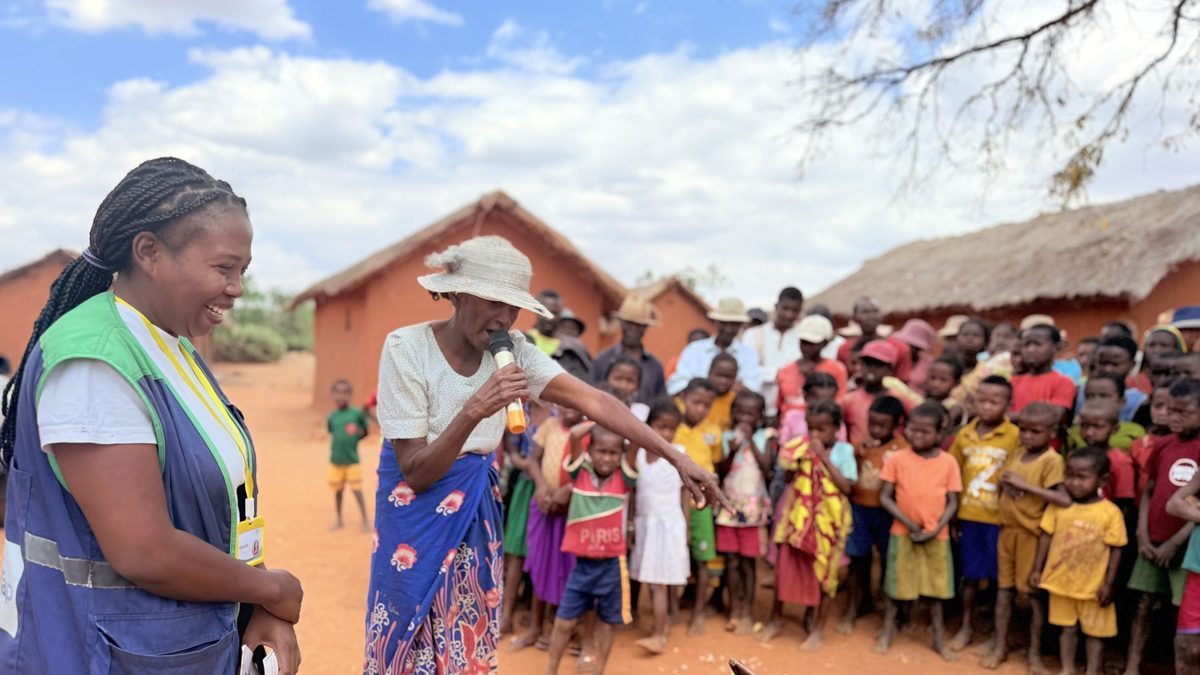
The project holds complete safeguarding and FPIC documentation. No assessment of safeguarding should be completed without direct access to this material.

  • A summary of FPIC, stakeholder engagement and legal ownership of emission reductions is set out in the PDDs.
  • Complete FPIC records for each household, including specific consent records and participation rates from all initial consultations.
  • Documented mechanisms for ongoing consent as the project scales across the project area.
  • A qualified gender expert is contracted to conduct gender-responsive workshops, focus groups and ongoing monitoring.
  • Multiple engagement channels: face-to-face visits, customer booklets with direct contact details, a Facebook channel, a confidential email channel, and the Gold Standard contact mechanism.
  • Carbon rights transfer documentation provided in French and Malagasy at the point of stove distribution.
  • Gender Responsive label awarded by Gold Standard on VPAs 3, 5, 6 and 7, visible as a project attribute on each registry page linked below: the first cookstove projects on the Gold Standard Impact Registry to carry the Gender Responsive label.
Registry evidence
PoA GS12600; VPAs GS12851, GS23369, GS23370, GS23409 (label shown under project attributes)
Safeguarding standard
Gold Standard safeguarding principles and requirements, applied at validation and every verification
FPIC standard
UN Declaration on the Rights of Indigenous Peoples; SaniTap's four-tier process in the FPIC explainer
Gender evidence
Gender expert contract and activity reports, gender-disaggregated monitoring, and the gender-responsive explainer

Assessors who have not had direct access to the project's safeguarding documentation should not assign risk ratings on this basis. SaniTap will make all FPIC records, gender expert reports and engagement logs available on request prior to any assessment.

Full FPIC documentation, gender expert contract and activity reports, and engagement channel records available on request. See the FPIC explainer.

05
Government authorisation & CORSIA

Verified and issued; Letter of Approbation held, LoA to follow.

LoA to follow

The project's authorisation status should be understood within the structure of Madagascar's Article 6 framework, in which a Letter of Authorisation (LoA) cannot be issued until verification is complete. This is a structural feature of Madagascar's framework, not a project deficiency. With verification now complete and the project Gold Standard certified, the LoA is the remaining step. To date, the Government of Madagascar has provided 23 LoAs, demonstrating that the country participates in international carbon markets.

Letter of Approbation received
Formal first step in Madagascar's LoA process, confirms active government support
Third-party verification complete
The precondition for LoA issuance under Madagascar's Article 6 framework is met; the project is Gold Standard certified
Letter of Authorisation
To follow, now that verification is complete. Madagascar has issued 23 LoAs to other projects, demonstrating the system is functional
CORSIA eligibility
Project meets ICAO eligibility criteria. LoA required to trade under CORSIA
CCP labelling
Issued credits carry the CCP label: Gold Standard is CCP-eligible and GS TPDDTEC v4.0 is CCP-approved on the ICVCM assessment status page. See section 07
Issued credits
76,607 VERs, 2025 vintage, VPAs 3, 5, 6 and 7, certified October 2026; serial-level detail on the credit register and the registry pages linked in section 01

Letter of Approbation and ICVCM CCP-eligible confirmation available on request. See the Madagascar Article 6 authorisations register (UNFCCC), the CORSIA position, and the integrity stack.

07
ICVCM Core Carbon Principles

The CCP label: what it requires, and how the project complies.

Labelled

The Core Carbon Principles are ten science-based criteria set by the Integrity Council for the Voluntary Carbon Market, the market's independent integrity body. A credit carries the CCP label only when the crediting programme is assessed as CCP-eligible and the specific methodology version as CCP-approved. The label is awarded by the Integrity Council, never by the developer. Look for it as you would look for a high-welfare label on meat at the market: it costs more to earn, and it tells you an inspector who does not work for the seller has checked how the product was made.

Programme
Gold Standard for the Global Goals, assessed CCP-eligible (ICVCM assessment status)
Methodology
GS TPDDTEC v4.0, assessed CCP-approved. Several other cookstove methodologies were assessed as not meeting the CCPs; this project does not use them
Effective governance, tracking, transparency
Programme-level criteria met through Gold Standard: public registry with unique serial numbers, public project documents, independent validation and verification
Robust independent third-party validation and verification
Accredited VVB audit of every monitoring period before issuance; first monitoring report covered 90,241 households
Additionality
Demonstrated under Gold Standard rules; carbon finance funds the stove roll-out and the behavioural monitoring that aid programmes do not
Permanence
Structural: avoided combustion cannot be reversed, so no buffer is needed
Robust quantification
Conservative parameters: subnational fNRB of 54% (section 02); continuous third-party stove monitoring on a random sample (section 03)
No double counting
Registry serials; host-country Letter of Approbation held, Article 6 authorisation and corresponding adjustment in progress (section 05)
Sustainable development benefits and safeguards
Gold Standard safeguards, FPIC and the Gender Responsive label (section 04)
Contribution to net-zero transition
Efficient biomass stoves as a transition technology with no fossil lock-in; cleaner fuels layered in as networks mature

What an assessor should check: the CCP label on the issued credits on the registry pages in section 01; the programme and methodology entries on the ICVCM status page; and the parameters in sections 02 and 03 that make the quantification conservative. See the Core Carbon Principles explainer.


06
Documentation

Request project documentation.

The public documents for each VPA are on the Gold Standard impact registry pages linked in section 01. SaniTap will provide full access to the remaining project files, including the ICS calculations, FPIC records, monitoring data and the Letter of Approbation, to any legitimate assessor or prospective buyer prior to commencing a review.